Products
WOOD BURNING STOVES are as popular as ever and still our favourite technology. Everybody loves a fire and as human beings we’ve sat round a camp fire every night for the last 2 million years proving wood to be the ultimate sustainable material. A fire naturally makes us feel warm, cosy, safe and relaxed. Wood burning stoves are three times more efficient than an open fire, you don’t lose heat up the chimney when they’re not on and stoves are safe to leave un-attended.
Today’s regulations insist that stoves are very efficient and clean burning with all the best manufacturers viewing these as a base standard going beyond expectations. A good stove, installed properly, burning dry wood can easily provide 20 - 25% of the average home’s heating and is cheaper to run than gas (and oil). Wood is carbon neutral as it releases the same amount when burnt as rotting on the forest floor. Obviously we are very lucky to be based in Surrey and especially in the Surrey Hills with an abundance of wood. Using a carbon neutral, locally sourced, often waste product and sometimes free fuel to heat your home makes perfect sense to us
Wood Burners create a different heat in your home as basically a metal box gets very hot, heating the air around them and convection moves the hot air effectively around the room (and the rest of the house to some degree). This circulation of air is particularly important to the fabric of older buildings which were designed with open fires and are not as draughty as they once were due to double glazing and loft insulation.
Also you can always rely on your stove to keep warm, provide light and even cook on in times of electricity blackouts which are becoming more common, especially in rural communities, as climate change causes more extreme weather and the power network is put under additional strain with the uptake of electric cars, heat pumps, etc. Over the years we must of heard back from more than a thousand customers expressing how installing a wood burning stove has been the best addition to their home.
There are many stoves on the market and we supply all the leading brands. Here’s Our Top Ten Selling Stoves
Parkray Aspect 5
https://www.hunterstoves.co.uk/product/aspect-5-eco/Charnwood C5
https://www.charnwood.com/all-stoves/room-heating-stoves/c-series/c-five/ACR Rowandale
https://www.acrheatproducts.com/stove/acr-stoves/rowandaleJotul F100
https://www.jotul.co.uk/products/wood/wood-burning-stoves/jotul-f-100-eco2-ll-seTermatech TT20R
https://www.specflue.com/stoves-and-renewables/woodburning-stoves/termatech/tt20/Chesneys Salisbury 5WS
https://chesneys.co.uk/product/stoves/wood-burning-stoves/salisbury-5ws-seriesClearview Pioneer 400
https://www.clearviewstoves.com/stove-details/pioneer-400Stovax Sheraton 5 Wide
https://www.stovax.com/stove-fire/sheraton-wood-burning-multi-fuel-stoves/sheraton-5-w/Hunter Allure 7
https://www.hunterstoves.co.uk/product/allure-7/Arada Ecoburn 5 Widescreen
https://www.aradastoves.com/ecoburn-5-widescreen-s3/p36783We supply and install all the main leading brands of stoves.
A stove must be of good build quality, clean burning, efficient, user friendly, proven design and stylish as a stove is usually the main feature in the main room of your home.
https://www.fireplacewarehouseandover.co.uk/woodburning-stoveshttps://www.croydonfireplaces.co.uk/products/brands
Freestanding Stoves are the most common stoves we install. Freestanding means the stove needs an air gap around the stove which is very important for the stove to effectively heat the room. If hot air around the stove cannot rise then you won’t feel the full effect of your stove and quite frankly you’ve just wasted a lot of money! Ideally we want 300mm (12”) above the stove and 150mm (6”) either side of the stove. Not only is it very important to select the correct kilowatt output for the room but also to insure the stove will fit comfortably inside the fireplace opening. Constructional work (as listed below in Traditional Stoves) is part of our installation service.
Multi Fuel Stoves enable you to burn wood and smokeless coal/ smokeless fuel. The advantage of burning smokeless coal is that it burns hotter for longer so if you want the stove for background heat during the day or to burn overnight it might be advisable to get a multi fuel stove. Some stoves come as multi fuel as standard and most manufacturers offer a multi fuel option. Some stoves are just wood burning only. The main difference being that wood burns gases realised as it heats up, hence the dancing flames, so logs are best burnt on a bed of ash. Coal needs air underneath to burn so a multi-fuel stove comes with a grate and ash pan.
Cast Iron Stoves will retain heat for longer but take longer to heat up and sometimes need more attention building the fire compared with steel stoves which heat up quickly but won’t retain the heat once the fire has gone out. Many manufacturers combine both materials building the body from steel with cast iron doors and tops.
Traditional Stoves are generally fitted in existing fireplaces and usually the chimney needs re-lining with a flexible stainless steel liner so access is required to the chimney pot. Sometimes the fireplace needs to be enlarged by raising the lintel, increasing the width of the opening, rendering inside the chamber and painting with heat proof paint, plastering the chimney breast and fitting new hearths. This is all services we offer as part of our installation.
Cylindrical/ Convector Stoves are modern stoves where the stove body is surrounded by steel panels with pockets of air which will heat up a larger area quicker. Many convection stoves come from Scandinavia as their rooms are larger and very well insulated although most manufacturers now offer some options. Cylindrical stoves are very popular in open plan, extended kitchens possibly with vaulted ceilings. Quite often convector stoves are installed with a twin wall, thermally insulated factory made chimney system. Most can be fitted with an external direct air kit.
Inset Stoves and insert / cassette stoves are fitted into or built into a suitable opening. Similar to Convector Stoves they have an air layer around the main stove body and are designed to heat the room just as effectively and efficiently as freestanding stoves. Inset stoves can sit on a hearth with a three sided frame or off the floor, in the wall, with a four sided frame. Often we install inset stoves into existing fireplace surrounds/ mantle pieces where the opening can be formed with natural stone slips and header.
Boiler Stoves are increasing in popularity as it makes absolute sense to use your stove to also heat radiators and the hot water cylinder reducing your use of fossil fuels. Normally we link this with an automatic gas or oil boiler. Boiler stoves work really well with a Solar Thermal hot water system as using wood and the sun to heat ourselves is what we’ve done for millions of years. Unfortunately, retro fitting a woodburner with a back boiler can be costly and disruptive to the property so it’s not always financially attractive. We are one of the few companies qualified to install boiler stoves and our speciality is combining different heat sources.
Pellet Stoves are not that popular in the Surrey Hills countryside but are within the M25. They are very efficient, highly controllable and almost fully automated. With minimal smoke output, a renewable fuel source and low consumption it’s surprising the uptake in the UK has been slow compared with Europe. Burning compressed wood in the form of pellets really does get the maximum energy from the most proven renewable and sustainable fuel source – wood.
Double Sided Stoves are really good at joining two rooms together in a visual and practical way. With more people going open plan in their homes, a chimney opened up on both sides with a double sided stove can look stunning and really bring the rooms to life.
Cooking Stoves have always been popular and why not? They come in many styles and sizes from cooking ranges with ovens, hobs, etc to a simple warming shelf or a hot plate. Obviously they need to be installed in the right setting but just think of those lazy weekends on a cold winters day in front of a fire cooking your favourite dishes…
Fire Surrounds are a classic and formal chimney piece which come in natural stone choices of limestone or marble and there are many styles to suit every home. Our four best selling limestone surrounds are…
https://www.gsgstoveandchimneyspecialists.co.uk/surrounds-beams/limestone-surrounds
As with stoves we supply and fit all the leading brands
https://www.fireplacewarehouseandover.co.uk/team/farmington-fireplaces/
https://www.fireplacewarehouseandover.co.uk/team/farmington-fireplaces/
Oak Beams are always a nice addition to a stove installation and it’s always nice to have a mantle shelf. Our preferred beams are locally sourced oak from the Surrey Hills, air dried and bespoke to each home. They will crack, split and move in time bringing real character to your front room. They come natural and un-finished and some customers like to oil them but most just leave them as they come.
We also supply finished oak beams…
https://focusfireplaces.co.uk/downloads/focus_beams_shelves_and_surrounds_10.pdf
and wood effect, non-combustible beams
https://focusfireplaces.co.uk/category/mantel-beams/non-combustible-beams-for-stoves
Hearths come in various materials and our most popular ones are made to measure in either Black Slate, Riven Slate, Honed Black Granite, Antique Granite and Polished Black Granite. Please let us know if you require samples.
Also glass hearths are popular on wood floors with cylindrical stoves.
https://www.eurostove.co.uk/wf-truncated-glass-floor-plate-p14
HEAT PUMPS are very much in demand and everyone is talking about them but the technology is nothing new. (They’re basically a fridge-freezer in reverse.) Recent advances in that technology has made heat pumps much more efficient and therefore much more desirable especially as homes become better insulated, electricity greener and a greater desire to escape our reliance on fossil fuels. The idea of heat pumps is over 150 years old and simply they obtain more than 75% of their heat from nature - be that the air (Air Source Heat Pumps), the ground (Ground Source Heat Pumps) or water (Water Source Heat Pumps) and the rest from electricity which is from more sustainable/ renewable sources every year. Heat is collected from nature using a fan, bore holes or pipes buried under the ground (or in water) which is transferred to a refrigerant which has been expanded so super cold (- 40C), it is then compressed so it becomes a gas with lots of energy/ heat and via a heat exchanger hot water heats your home the same as any traditional boiler.

Air Source Heat Pumps come in two basic models: a low temperature monobloc unit or high temperature split units.
Low temperature heat pumps consist of an outdoor unit that can comfortably heat water to 50C with outdoor temperatures down to -5C without losing efficiency or heat output so ideal for our climate. High temperature heat pumps consist of an outdoor unit and an indoor unit which heat the water to 65C. Low temperature units are more efficient with a SCOP (Seasonal Coefficient Of Performance) of above 4.0 for a well-designed system. This basically means their efficiency rating so for 1 Kilowatt of electricity they produce 4 Kilowatts of heat.
With a new build property which is well insulated with under floor heating the flow temperature can be designed for 40C greatly increasing the efficiency/ SCOP.
When retro fitting an air source heat pump into an existing property which has cavity wall insulation, double glazing and 200mm of loft insulation we can design the system to run at 50C but sometimes need to increase the size of some radiators (three on average) and swap the hot water cylinder as the lower water temperature (compared with 65C of a traditional gas boiler) needs a larger surface area to create the same amount of heat.
High Temperature heat pumps are not so popular despite the fact they get the water flow temperature to 65C because they are not so efficient with a SCOP of around 2.8. and obviously we need space for the indoor unit to be sited. Government grants and incentives do not generally apply to high temperature units.
Ground Source Heat Pumps are more efficient than air source as the earth is a constant heat source that doesn’t fluctuate with day or night and summer or winter. Heat is collected via bore holes which are drilled vertically down and filled with brine or a ground array which are pipes filled with brine laid in horizontal trenches usually dug 1.2m deep and two metres apart. Depending on how much heat is needed for the property depends how much land is needed for the ground array but on average we need about 700 square metres. The design of the ground collectors is vital to an effective heating system. A ground source heat pump can expect a SCOP of around 4.5 (meaning 4.5kW of heat for every 1kW of electricity) and works best with under floor heating. Ground Source Heat Pumps cost more to install compared with an Air Source Heat Pump due to the cost of the bore holes or ground array.
Water Source Heat Pumps are excellent as water is a constant source of heat and even more reliable than the ground. Unfortunately, most people don’t have a lake in their garden or a suitable river nearby. It can be difficult and costly to get permission from the Environment Agency if you don’t own your own lake.
https://www.lg.com/uk/heating-awhp
https://www.stiebel-eltron.co.uk/en/products-solutions/renewables/heat_pump.html
https://www.daikin.co.uk/en_gb/product-group/air-source-heat-pumps.html
https://www.freedomhp.co.uk/midea-heat-pumps
https://www.vaillant.co.uk/homeowners/products/renewables-solutions/all-products/
https://www.samsung.com/uk/business/climate/heating/
https://www.grantuk.com/products/air-source-heat-pumps/
BIOMASS BOILERS use an organic, plant based material (usually wood) as fuel to heat your home. The three most common fuels are pellets, wood chip and logs. Biomass is viewed by many as the most important source of renewable energy and is carbon neutral from sustainable sources. Woody biomass is an effective way to heat your home as it produces high water temperatures which is ideal for older, not easily insulated houses particularly in rural areas as fuel storage is an important factor.
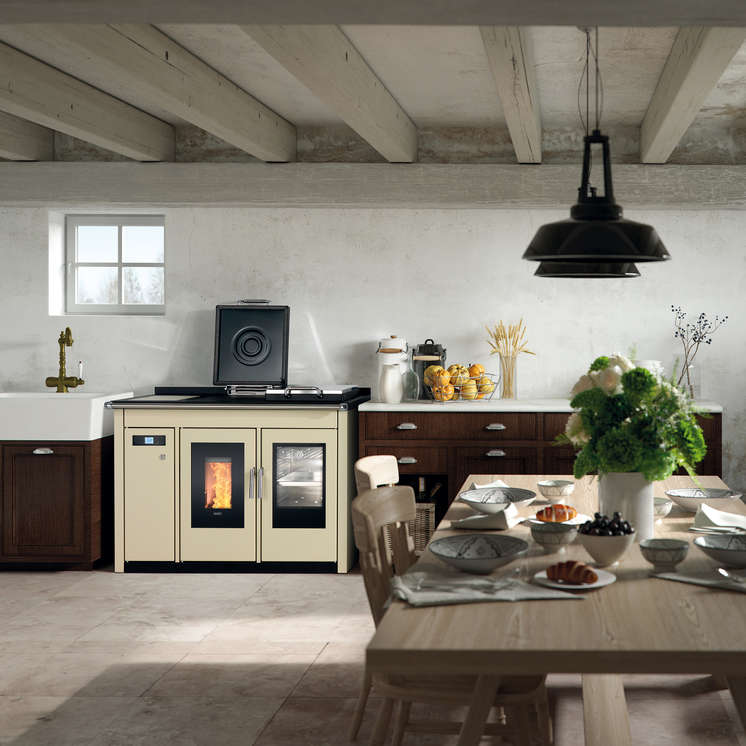
Pellet Boilers are the most common form of biomass boilers and use pellets which generally comprise of compacted saw dust and have a moisture content of 6 – 8%. The quality of the pellets is very important as they must be consistent in size, density and moisture content. Pellet boilers are very clean burning with very little gases emitted achieving almost complete combustion meaning they are over 90% efficient and leave very little ash. The pellets can be feed manually or a hopper is usually designed into the system so that your pellet boiler is fully automated.
Wood Chip Boilers require more room for fuel storage and are generally found on farms or estates. They are just as efficient as pellets but wood chips are cheaper to buy and often can be produced from your own supply. Storing and drying the wood chips is very important and, similar to pellets, a hopper with an automated feeding system must be incorporated into the system design.
Log Boilers or Log Gasification Boilers use logs but, unlike a wood burning stove with a back boiler, the gases released from burning wood are re-burnt in a second chamber allowing efficiency levels of 80 – 90%. Log boilers are very cost effective if you have access to your own fuel but the boilers do need feeding on a daily basis and a lot of wood is required so it’s important to calculate storage space required as the logs must be below 25% moisture content – air dried for two to three years.
Pellet Stove with Back Boilers are a very attractive way to incorporate the convenience of an automated, clean burning and highly efficient pellet stove to heat your home with the beauty of a real fire. Various styles and sizes exist and pellet range cookers are very popular.
https://www.klover.co.uk/products
https://www.eta.co.at/en/products/product-overview/
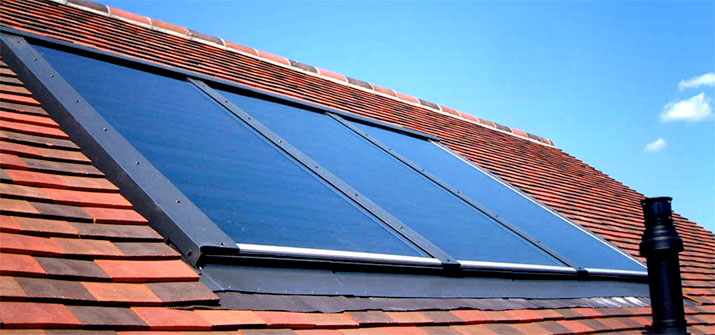
SOLAR THARMAL harnesses the power of the sun to heat your hot water. It is a very simple idea and one of our favourite technologies as once installed your solar thermal system will just keep giving. Collectors on your roof (in your roof or on a frame) get hot and absorb solar energy, even in cloudy conditions, which heats water inside them. Once the fluid inside the collectors is 4C warmer than your hot water cylinder a pump switches on and transfer heat into hot water. A well designed system with a good roof pitch, facing the sun with little over-shadowing can easily provide 75 – 80% of your hot water needs.
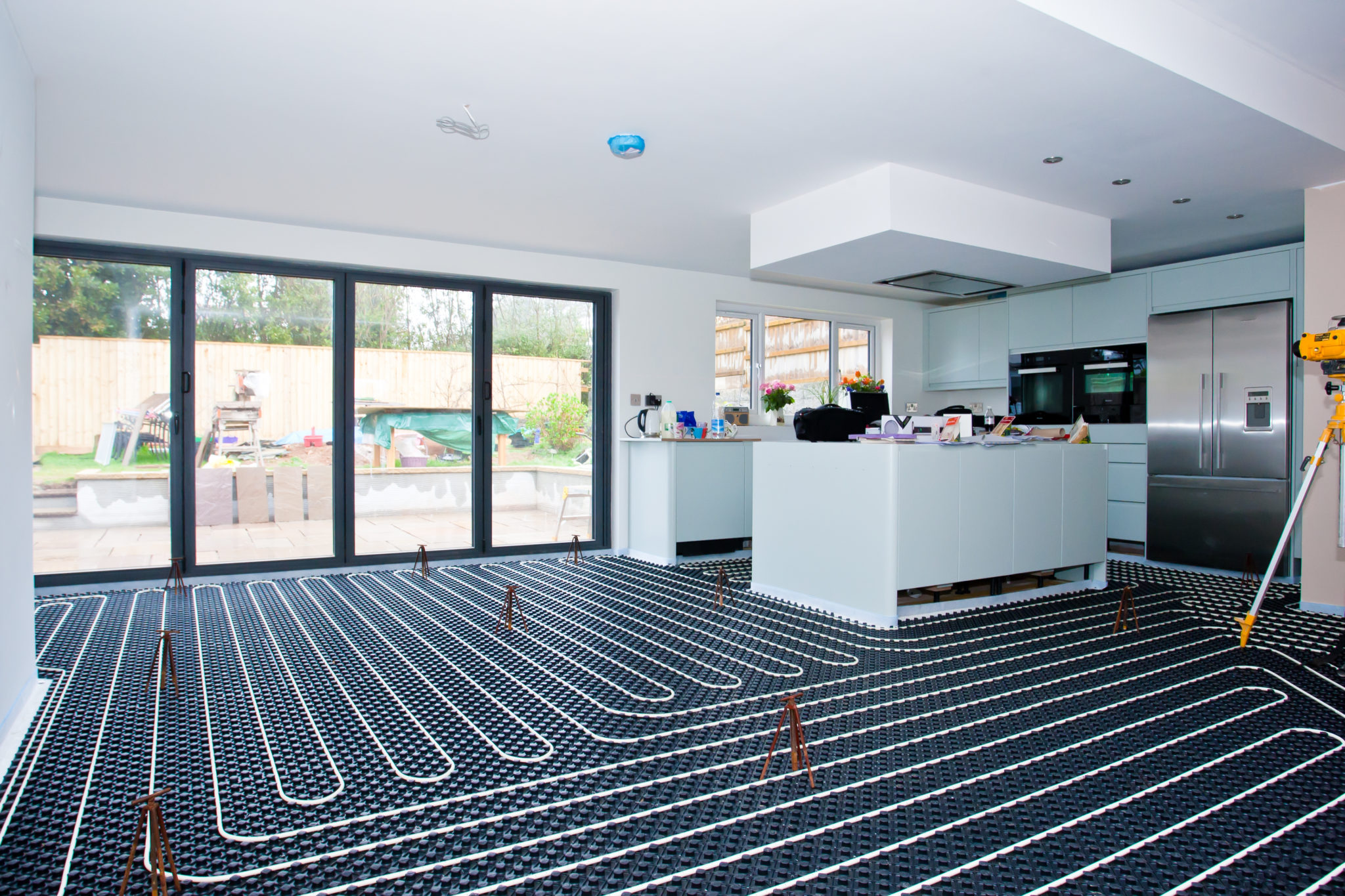
UNDER FLOOR HEATING is the most efficient and effective way to heat your property as pipes in the floor gently turn the whole area into a large heat emitter. The more insulated your home is and particularly with open plan rooms it is far more cost effective than traditional radiators which are unsightly and require higher water temperatures. Underfloor heating can easily work with water temperatures at 40C compared with 65C needed for radiators. Under floor heating can be laid on solid concrete floors on top of insulation in screed on the ground floor for new builds and extensions; on aluminium plates between joists for upstairs or retro fitting suspended floors; or on floating low profile boards with grooves which only add 15mm to the height of the existing floor. The more insulated the house the more effective the under floor heating will be so it is important to have a well designed and installed system.